

You've been quoted $2,800 to respray a single rear door. Another shop wants $6,500 for the full side. Both say their work is quality. Neither has explained why their number looks the way it is.
That gap is normal, and it isn't always a sign that one shop is ripping you off. Car spray painting is one of those jobs where the finished panel looks the same in the quote line, but the work underneath varies by thousands of dollars. This guide walks through where the money actually goes in a Sydney respray, what a fair price looks like by scope, and how to read a quote line by line so you can pick the right one.
At North Shore Smash Repairs in Artarmon, we've done spray painting and panel work on every kind of car that comes through the Lower North Shore, from a ten-year-old Corolla to an Aston Martin. The principles below apply to all of them.
What you're actually paying for in a car spray painting quote
A respray quote covers materials, booth time, and labour, but the split often surprises people. Paint, primer, and clear coat usually make up about 15 to 20 percent of the total cost. Labour carries the rest, and the single biggest slice of that labour is surface preparation.
Prep is the part you don't see in the photo of the finished car. It includes washing and decontaminating the panel, removing trims and badges, sanding the existing paint back to a clean keyed surface, fixing any dents or pinholes, masking the rest of the vehicle to protect it from overspray, and applying primer. On a quality respray, prep alone can take 40 to 60 percent of the total labour hours.
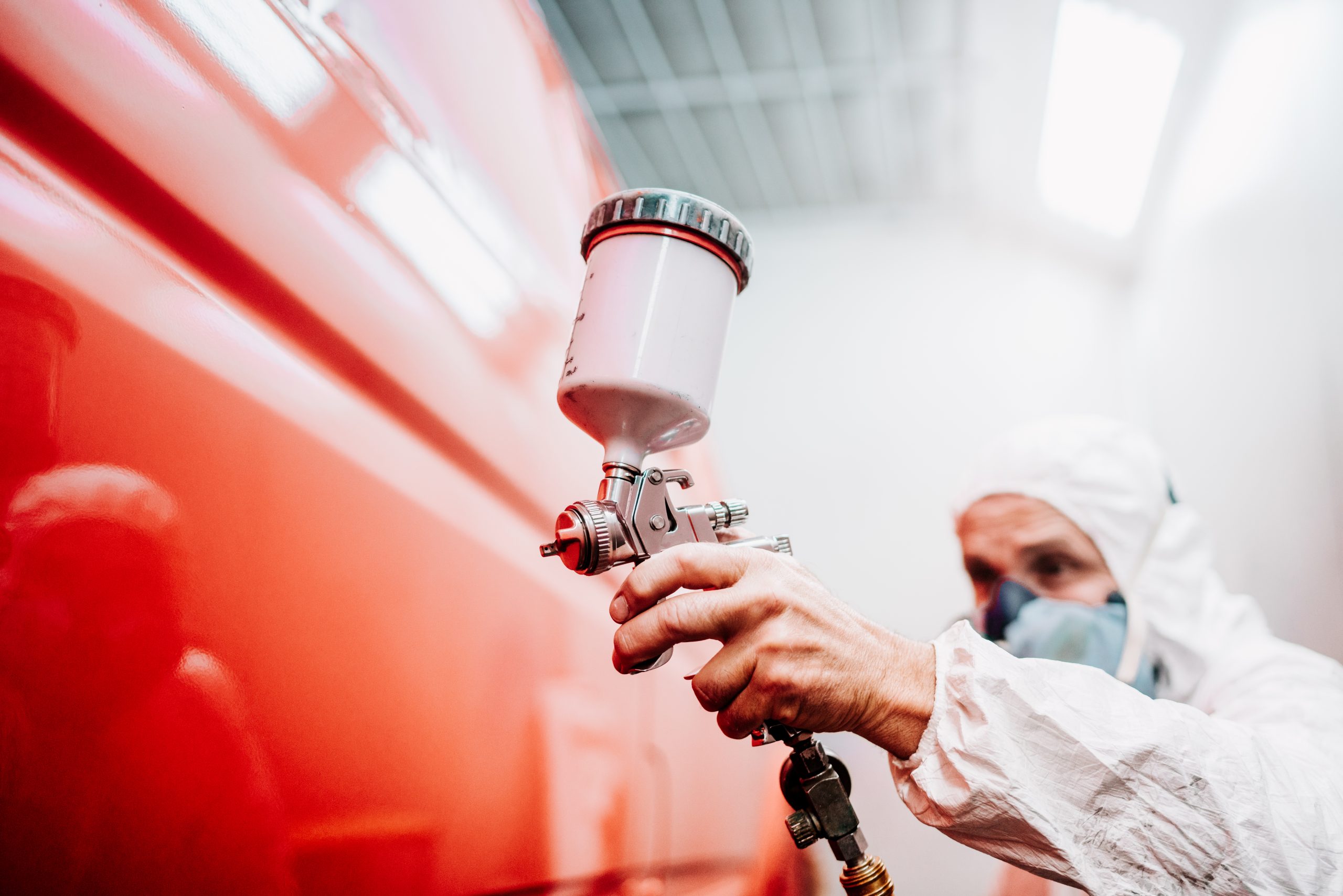
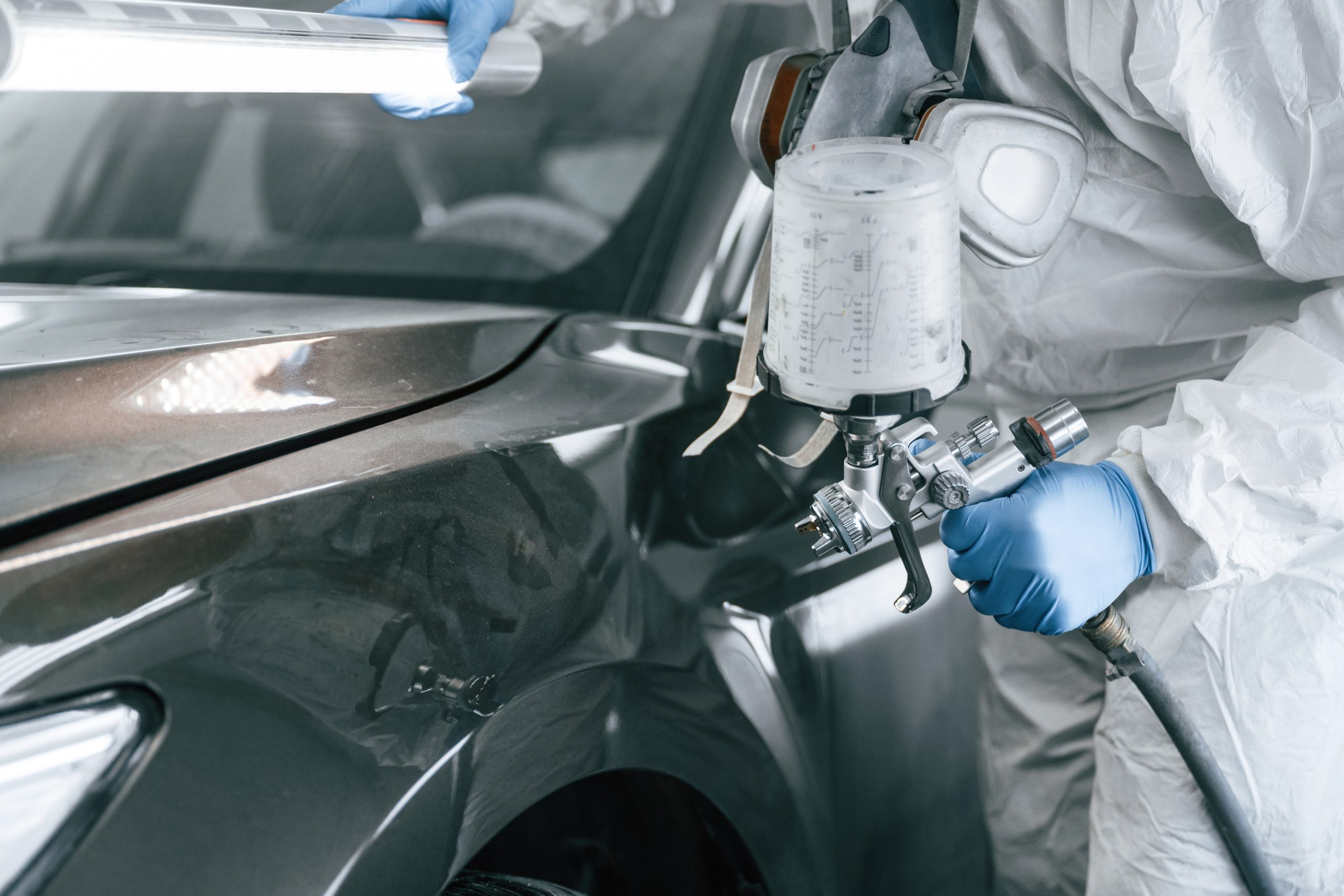
Only then does paint actually go on. The colour coat is sprayed inside a controlled booth, usually in two or three thin passes. A clear coat goes over the top for protection and depth. The car then bakes at a set temperature so the paint and clear cure properly. After cure, the painter inspects each panel for runs, dirt nibs, or mismatches, and finishes with a polish to remove any minor flaws.
Labour accounts for roughly 60 to 70 percent of a typical respray cost. When two quotes for the same damage come back thousands of dollars apart, most of the difference sits in how many labour hours each shop has budgeted for prep and finishing. That's the number worth paying attention to.
Sydney respray cost ranges by scope
Here's what a fair Sydney respray looks like in 2026 at each scope. These ranges assume a reputable shop using a spray booth and factory-quality materials. Quotes sitting well below these numbers usually reflect shortcuts in prep or paint quality rather than a genuine bargain.
| Scope | Typical Sydney cost | What's included |
|---|---|---|
| Spot repair or small blend | $200 – $600 | Small scratch or chip repair, colour-matched blend into the damaged area only |
| Single panel respray (door, guard, bonnet, bumper) | $400 – $1,500 | Full panel prep, colour coat, clear coat, blend into adjacent panels on metallic or pearl colours |
| Multi-panel section (full side, front end, or rear) | $1,500 – $5,000 | Two to four panels prepped and sprayed, blending across joins, cost varies with paint type |
| Full car respray, closed-door (factory colour, body only) | $4,000 – $8,000 | All external panels; door jambs, engine bay, and boot well stay the original colour |
| Full car respray, open-door or colour change | $8,000 – $15,000 | External panels plus jambs, bay, and boot; full disassembly and reassembly |
| Prestige, three-stage pearl, or bare-metal restoration | $15,000+ | Multi-stage paint, show-grade prep, extended booth time, often 80+ labour hours |
Prestige vehicles and harder finishes (three-stage pearls, candy colours, BMW Frozen matte, Mercedes-Benz MagnoMatt) sit at the upper end of each bracket. A recent Sydney respray on a BMW M3 in a custom pearlescent finish came in at $13,800, which lines up with the full-respray prestige band.
Why two shops can quote thousands apart for the same car
Same damage, different quote sheets, different totals. The variables are almost always the same five things.
- Paint type. A solid white is cheaper to match, mix, and spray than a metallic silver, and both are cheaper than a three-stage pearl or a special-order prestige colour. Three-stage paints need a base coat, a translucent mid-coat, and a clear coat, which roughly doubles the application time compared with a standard two-coat job.
- Booth quality. Modern downdraft booths pull air down through the floor, which keeps overspray and dust out of wet paint. They cost more to install and run than older cross-draft booths, and that cost shows up in the hourly rate. A shop using a heated downdraft booth will almost always quote higher than one spraying in a converted shed, and the finish reflects that.
- Prep depth. Skipping prep is the fastest way to cut a quote. It's also the fastest way to produce a respray that looks fine in the sun on collection day and starts peeling or crazing inside twelve months. A quote that doesn't specify sanding, filling, and priming is usually a warning sign, not a bargain.
- Blending. Blending means feathering the new paint into the adjacent panels so the repaired section doesn't sit as a visible patch. It adds labour and materials, but on metallic and pearl finishes it's the only way to get an invisible repair. A quote that doesn't mention blending on a metallic car is either cutting corners or assuming you'll accept a visible mismatch.
- Warranty. A written five-year warranty, or a lifetime warranty on workmanship, carries real cost. The shop has to stand behind the work, rectify failures, and carry insurance that covers it. A shop offering no warranty can undercut on price because they're not carrying that liability.
A $2,500 quote and a $4,500 quote for the same damage aren't lying to each other. They're offering different products, with different risks attached.
How to read a respray quote line by line
Most Australian auto spray painting quotes break down into similar line items. Knowing what each one covers helps you compare two quotes on an even basis.
Panel prep. Covers sanding, filler if needed, and priming for each panel being painted. Look for this as a specific line, not folded into "painting".
Paint materials. Covers the actual paint, primer, and clear coat. Should sit separately from labour.
Booth time. Covers the hours the car occupies the spray booth and the energy cost of baking. Sometimes rolled into labour, sometimes listed separately.
Blend. Covers the labour to feather new paint into adjacent panels for colour match. Usually listed per adjoining panel.
Clear coat. Covers the protective top layer. Should always be applied over new colour, never skipped.
Polish and inspection. Covers the final cut and polish after cure, plus the quality check before handover.
Once you know the line items, the warning signs are easier to spot.
Red flags in a respray quote:
- No prep line item, or prep folded into a single lump figure
- Suspiciously low labour hours relative to the scope of work
- No mention of blending on metallic or pearl colours
- No written warranty on paint or workmanship
- No photos or documentation of the pre-work condition
- Vague descriptions like "spray door" rather than specifying prep, paint, blend, clear, and cure
Green flags in a respray quote:
- Itemised breakdown with prep, paint, labour, and blend all listed separately
- A written warranty you can read before the job starts
- Before-and-after photos, or at minimum pre-work photos of the damage
- Named paint system (PPG, Glasurit, Cromax) rather than generic "two-pack"
- A clear timeframe that includes cure time, not just "a few days"
- Clarity on what happens if a problem appears after collection
When a low quote is too low, and when a high quote is fair
Most of the time, the middle quote is about right. The exceptions sit at both ends.
A three-panel respray on an older Camry at $1,800 is plausible. The same three-panel respray on a Porsche 911 finished in a Paint to Sample colour at $1,800 isn't. The paint alone on prestige programmes can cost more than that. If a quote sits well below the typical range for a prestige vehicle, the shop is either planning to use non-matching paint, skipping the factory-grade prep, or both.
Prestige paint systems drive a real chunk of the cost at the upper end:
- BMW Individual offers extended paint palettes and paint-to-sample work, with the higher Individual Manufaktur tier handling bespoke orders for 3 Series and above. Custom Individual colours can add five figures to a factory order, and matching one on a respray requires exact colour codes and careful layer work.
- Mercedes-Benz designo and designo Manufaktur cover extended paint and bespoke finishes. Designo colours often use multi-stage processes that a general panel shop won't set up for.
- Porsche Exclusive Manufaktur includes Paint to Sample (PTS), which allows customers to commission almost any colour on a 911 or similar. PTS colours on a new car can add tens of thousands to the factory price, and any post-delivery respray has to match the original layer sequence exactly.
- Audi exclusive covers Audi Sport's bespoke paint range. Similar constraints on matching and layer build apply.
If your vehicle carries paint from any of these programmes, the cheap quote isn't competitive, it's missing work. The higher quote usually isn't a rip-off, it's the shop telling you what the job actually costs when done properly.
Insurance-paid resprays vs paying privately
When the repair is going through insurance, the quote you see may be capped at what the insurer's preferred repairer is willing to charge. In NSW, most comprehensive policies include some form of choice-of-repairer clause, which lets you nominate your own panel beater rather than use the insurer's network. The terms sit in your Product Disclosure Statement (PDS), and some insurers (including NRMA in recent policy updates) now charge extra for full choice of repairer.
If your chosen repairer's quote is materially higher than the insurer's preferred one, the insurer may ask you to cover the gap, negotiate on scope, or cash-settle the claim at their quote value. A more detailed guide to choice of repairer in NSW is coming. For now, the short version: read your PDS, ask your insurer in writing about your rights, and make sure any quote comparison is based on like-for-like scope. Our smash repairs page covers how we work with NSW insurers on not-at-fault claims.
Back to the $2,800 vs $6,500 question
The $2,800 single-panel quote and the $6,500 full-side quote aren't both wrong. They're answering different questions about the same damage. The right number is the one where the scope, the prep depth, the warranty, and the paint system actually match the work your car needs.
If you're sitting with a quote you can't make sense of, or you'd like a second opinion that walks you through every line item, we're at 46 Whiting St, Artarmon. We cover car spray painting and panel work for Audi, BMW, Porsche, Mercedes-Benz, and mainstream Australian brands across the Lower North Shore. Bring the quote in or send it through and we'll tell you plainly what the work should involve.
Frequently asked questions
Metallic paint adds aluminium flakes to the colour coat, and pearl paint adds ceramic crystals. Both need more precise application to match the factory finish, which means more labour and more materials. Colour matching on metallic is also harder, so blending into adjacent panels is usually required on any respray larger than a small touch-up. Expect a 15 to 30 percent premium over solid paint for the same scope.
The paint is touch-dry within hours of leaving the booth. Full cure, where the paint reaches its final hardness, takes two to four weeks depending on paint type and local conditions. During that window, avoid automatic car washes, polish, wax, and chemical cleaners. A respray that fails in the first few months is almost always one that was rushed through cure.
In NSW, most comprehensive policies let you choose your own repairer, but the exact terms sit in your PDS. Insurers often steer customers toward their preferred network for speed and cost control, but they cannot force you onto it under a standard choice-of-repairer policy. If your quote is higher than the insurer's preferred repairer, they may ask you to cover the gap or cash-settle at the lower amount. Some policies now charge extra for full choice of repairer, so check this at renewal.
A quality respray that matches the factory colour and finish has little impact on resale value, and can raise it if the original paint was faded or damaged. A poor respray, with visible overspray, bad blending, or runs in the clear coat, actively hurts resale. Buyers on the used market will often pay more for original paint in good condition than for a repaint, even a good one.
Reputable Australian shops offer at least a five-year warranty on paint adhesion and colour match. A lifetime warranty on workmanship, for as long as you own the vehicle, is the benchmark at the top end of the market. Get it in writing before any work starts, and check what it actually covers. A lifetime warranty that excludes peeling, fading, and blending issues isn't a real warranty.




