

Sometimes, but only in a narrow set of cases. A shallow, rounded dent with the paint still intact, sitting in the middle of a flat panel or a flexible bumper, can sometimes be improved with a cheap kit or a bit of hot water. Anything with a crease, a sharp edge, cracked paint, or a dent on a body line is a job for a professional. Push a DIY fix on the wrong dent and you can turn a cheap repair into a respray.
You've got a small dent in the door. A trolley got away from someone, a cricket ball found the driveway, or the car beside you swung a door in a tight North Shore basement car park. The paint looks fine. Now your phone is full of videos promising to pop it out with a plunger, a hairdryer, or a $30 kit from Bunnings. Before you buy anything, it helps to know which of those methods do something and which just risk making the dent worse.

When a DIY fix is worth a try
Cosmetic alloy wheel damage is usually limited to the face or outer lip of the wheel. It may include light kerb rash, small scuffs, shallow scrape marks, damaged clear coat or surface marks from a low-speed gutter touch.
Cosmetic does not mean unimportant. A scraped wheel can make an otherwise clean car look neglected, especially on a prestige or late-model vehicle. Some finishes are harder to blend than others, so the repair should suit the wheel rather than just cover the mark.
The methods people try, and what they really do
Most DIY dent tricks fall into one of five buckets. Here's what each one is meant to do, and what tends to happen in practice.
| Method | What it's meant to do | What tends to happen |
|---|---|---|
| Suction cup or bridge puller | Grips the dent and pulls it out | Works best on a large, shallow, rounded dent with intact paint. Does little on creases or dents near an edge. |
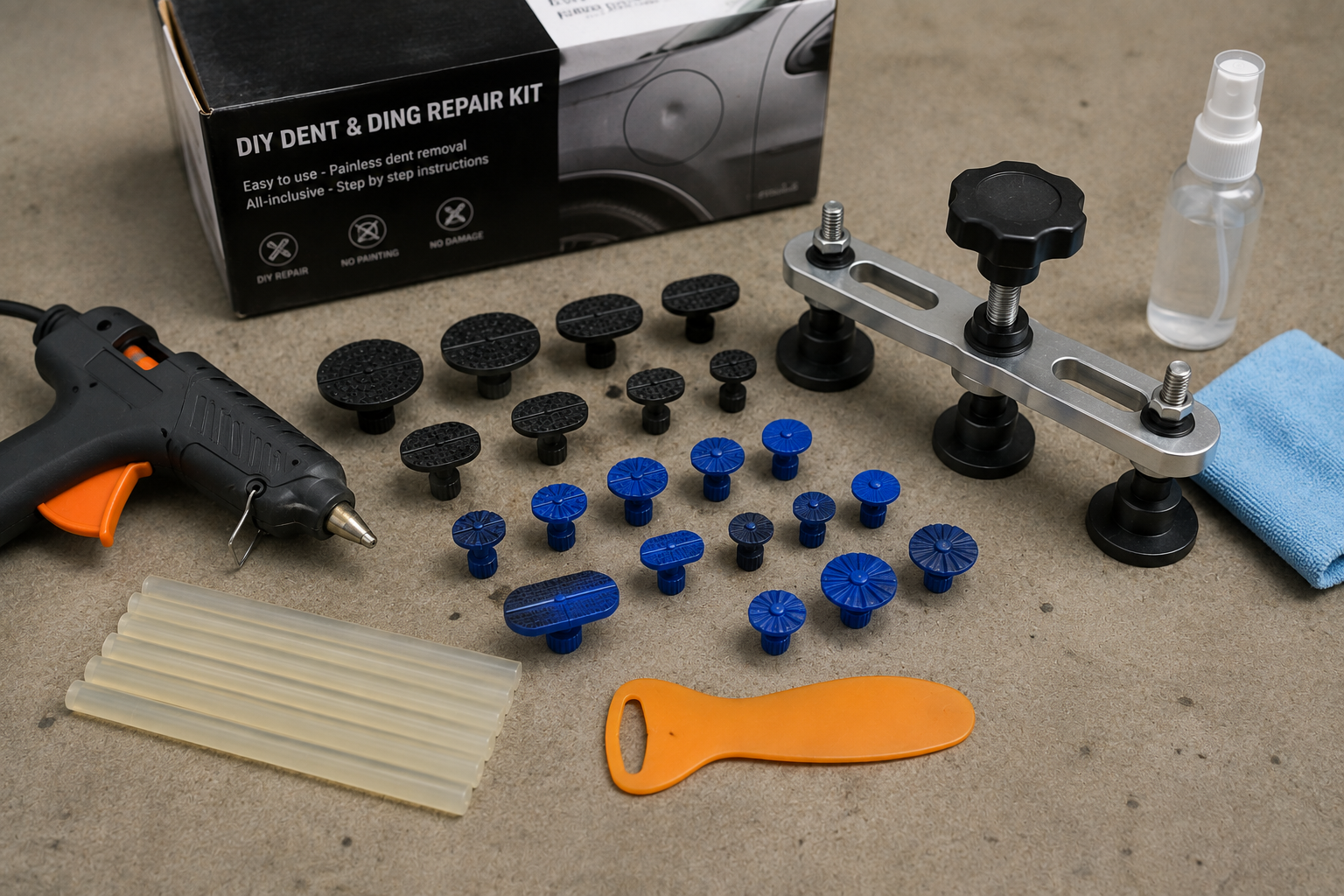
| Glue-pull kit (glue gun, tabs, puller) | Glues a tab to the dent, then pulls it up | The home version of a real repair method. Can help on a small, shallow dent, but it's easy to over-pull and leave a raised high spot that's harder to fix than the dent was. |
| Hot water on a plastic bumper | Softens the plastic so it springs back | Sometimes works on a shallow dent in a flexible plastic bumper, because the plastic has some shape memory. Does nothing on a steel or aluminium panel. |
| Hairdryer then compressed air | A “thermal shock” that pops the metal out | The one you see most online. It rarely does much on a real metal panel, and the heat can stress the paint. |
| Dry ice | The same thermal idea, colder | Rarely works, and dry ice can burn your skin. Not worth the trouble. |
The kits themselves are honest about their limits, if you read the box. The glue-pull kits sold at Bunnings, Supercheap Auto and Repco all say the same thing in the fine print: they're for small dents where the paint has not been cracked or damaged. That single line rules out a lot of dents.
Why a DIY fix can cost more than it saves
Here's the part the videos skip. A dent that goes wrong is more expensive to fix than the dent you started with.
- Cracked paint changes everything. The moment the paint cracks, chips or lifts, no paintless method can help, yours or a professional's. The panel then needs filling and a respray, which runs into the hundreds of dollars and up. A $30 kit that splits the clear coat is the most expensive $30 you'll spend.
- Over-pulling makes a new problem. Pull too hard and the metal comes out past flat, leaving a raised high spot. Pushing a dent in is easy. Coaxing a high spot back down without marking the paint is not. The dents that come into a workshop worse than they started are almost always home glue-pull jobs.
- You can't see what you're doing. A panel beater reads the dent under a special striped light that shows every high and low point in the reflection. Without it, you're working blind and can't tell when to stop.
When a small dent is a professional job
Some small dents are never a DIY job, no matter how tempting the kit looks. Leave these to a workshop:
- The paint is cracked, chipped or scratched over the dent.
- The dent has a sharp crease or a deep point.
- It sits on a body line, a panel edge, or over a bracket underneath.
- The panel is aluminium, which is common on European and late-model cars and far less forgiving than steel.
- The car's finish matters to you, for resale, a lease return, or because you just like it right. Factory paint is worth protecting, and it's the one thing a home fix can ruin for good.
What a professional does instead
On a suitable small dent, a workshop uses paintless dent removal. The metal is worked back into shape from behind, or with a controlled glue-pull, and the original factory paint stays exactly as it was. It's usually quick, and often a few hundred dollars, far less than filling and respraying. The full cost breakdown, and the line between a paintless fix and one that needs paint, are covered in our other dent guides.
Before you buy a kit, get a second opinion
The cheapest way to avoid an expensive mistake is a two-minute check before you spend anything. Take one clear photo of the dent in daylight, and one from a low angle so the shape shows, and send them to North Shore Smash Repairs in Artarmon. We'll give you an honest read on whether it's a safe home fix, a paintless job, or one that needs paint. If a kit will do the trick, we'll say so.




