

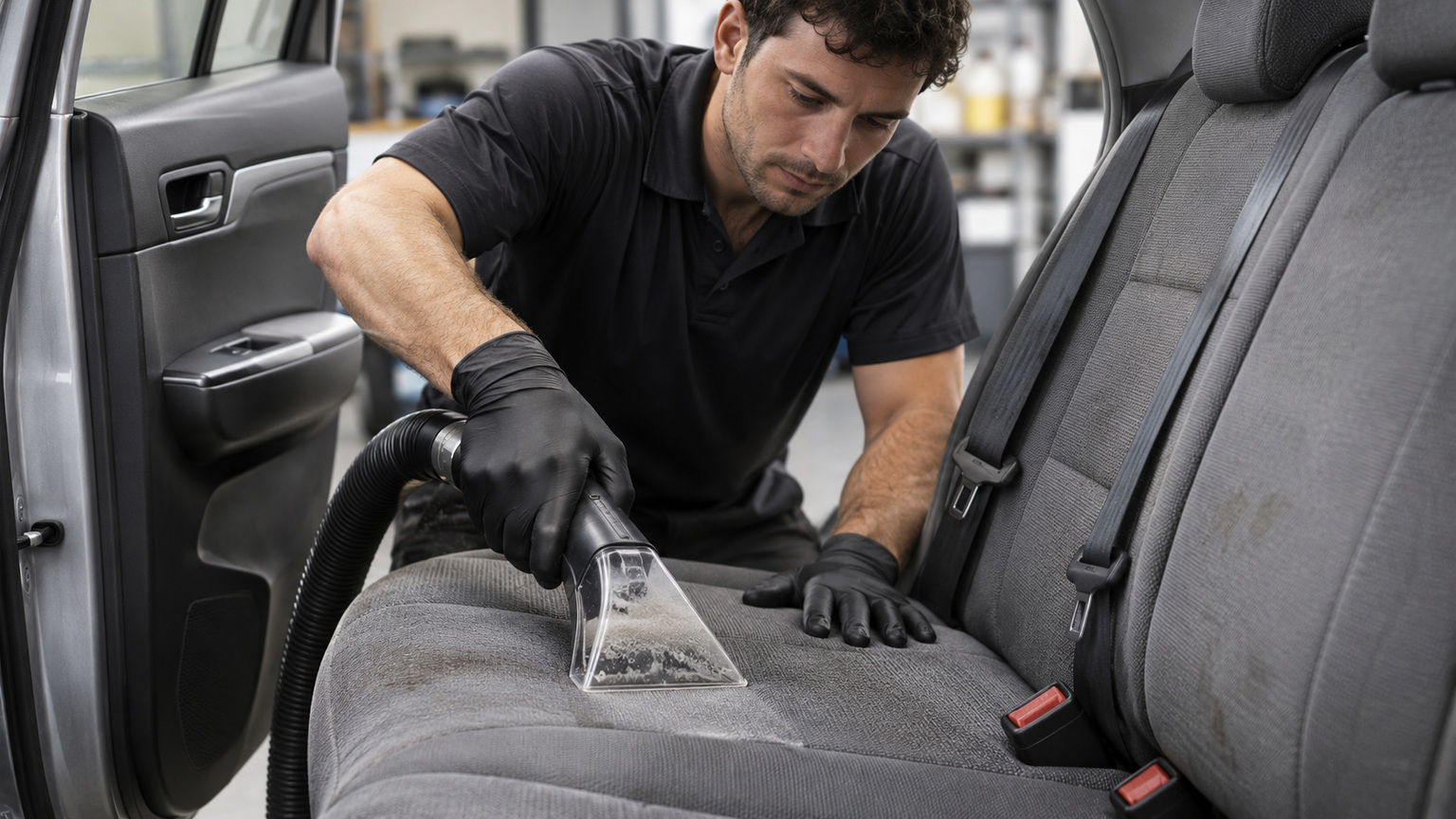
An interior car detail can remove dirt, spills and many marks from cloth seats, carpet, leather, vinyl and plastic trim. How much comes out depends on the surface and on what caused the mark or smell. Cleaning cannot mend a tear, bring back a worn finish or put back colour that has faded out of the material.
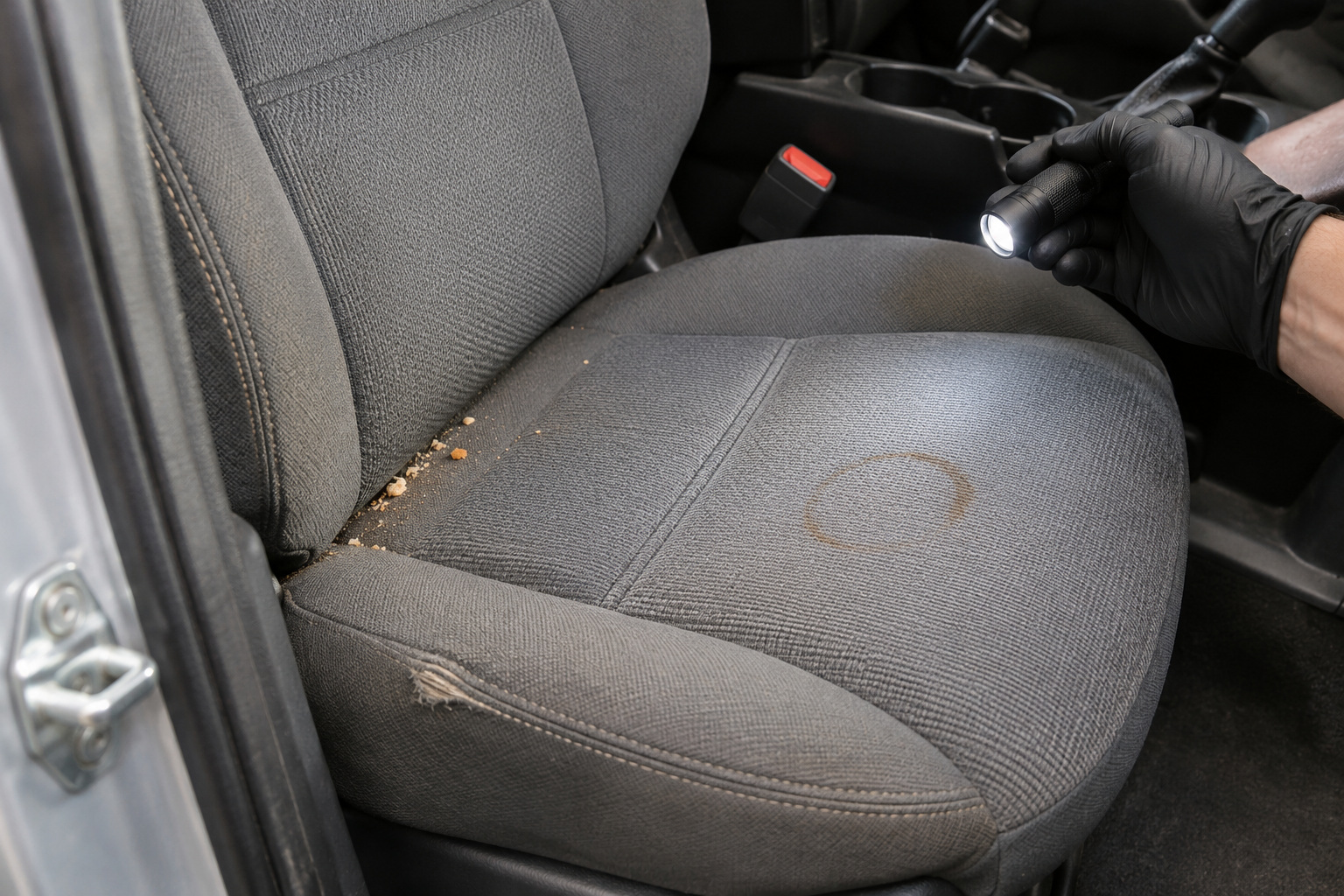
From the driver’s door, a coffee ring on a cloth seat and a cracked leather seat edge can look like the same problem. Only one of them is a cleaning job.
Dirt, stains and wear are different problems
Most of what makes a cabin look tired falls into one of three groups. Each one responds to cleaning in a different way.
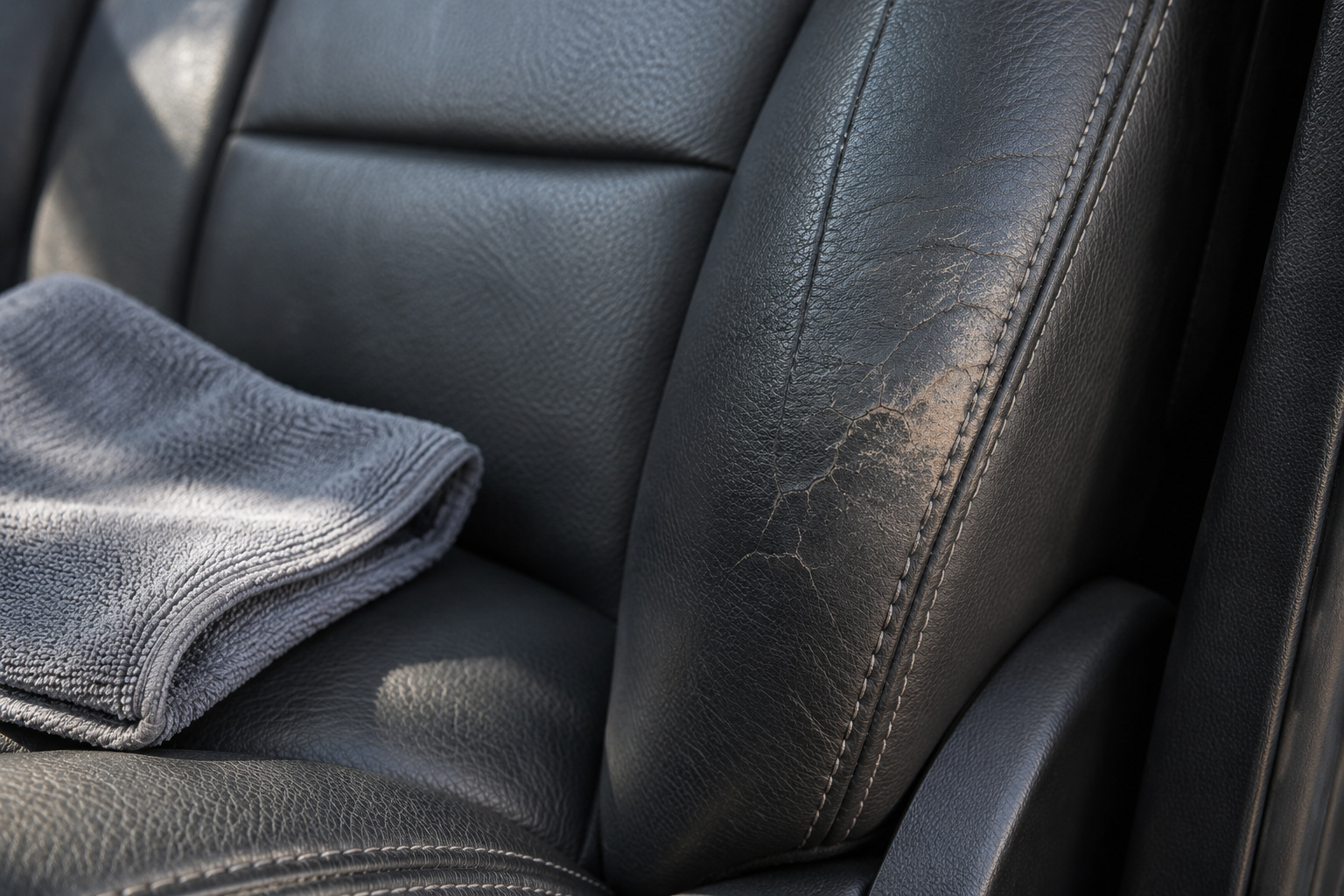
It is not always easy to tell which group a mark belongs to. Take a dark patch on a seat bolster, the raised side of the seat you slide over getting in. It may be grime from clothing, or it may be where the surface has worn. A proper clean often shows the difference. Whatever is left afterwards is more likely to be in the material than on it.
- Loose dirt is dust, crumbs, sand and pet hair sitting on a surface or caught between fibres. A thorough vacuum lifts most of it.
- Soiling and stains are spills, grime and body oils that have soaked into fabric or built up on a surface. A vacuum leaves these behind. They need a clean that suits the material, such as a fabric shampoo on cloth seats.
- Wear and damage is a change in the material itself. Think of a rubbed-through finish, a split seam, a burn, a tear or faded colour. There is nothing to wash out, so cleaning leaves it as it is.
That is also why nobody should promise from a photo that a particular stain will lift. The surface and the cause both matter, and a photo shows neither clearly.
Fabric and leather need different care
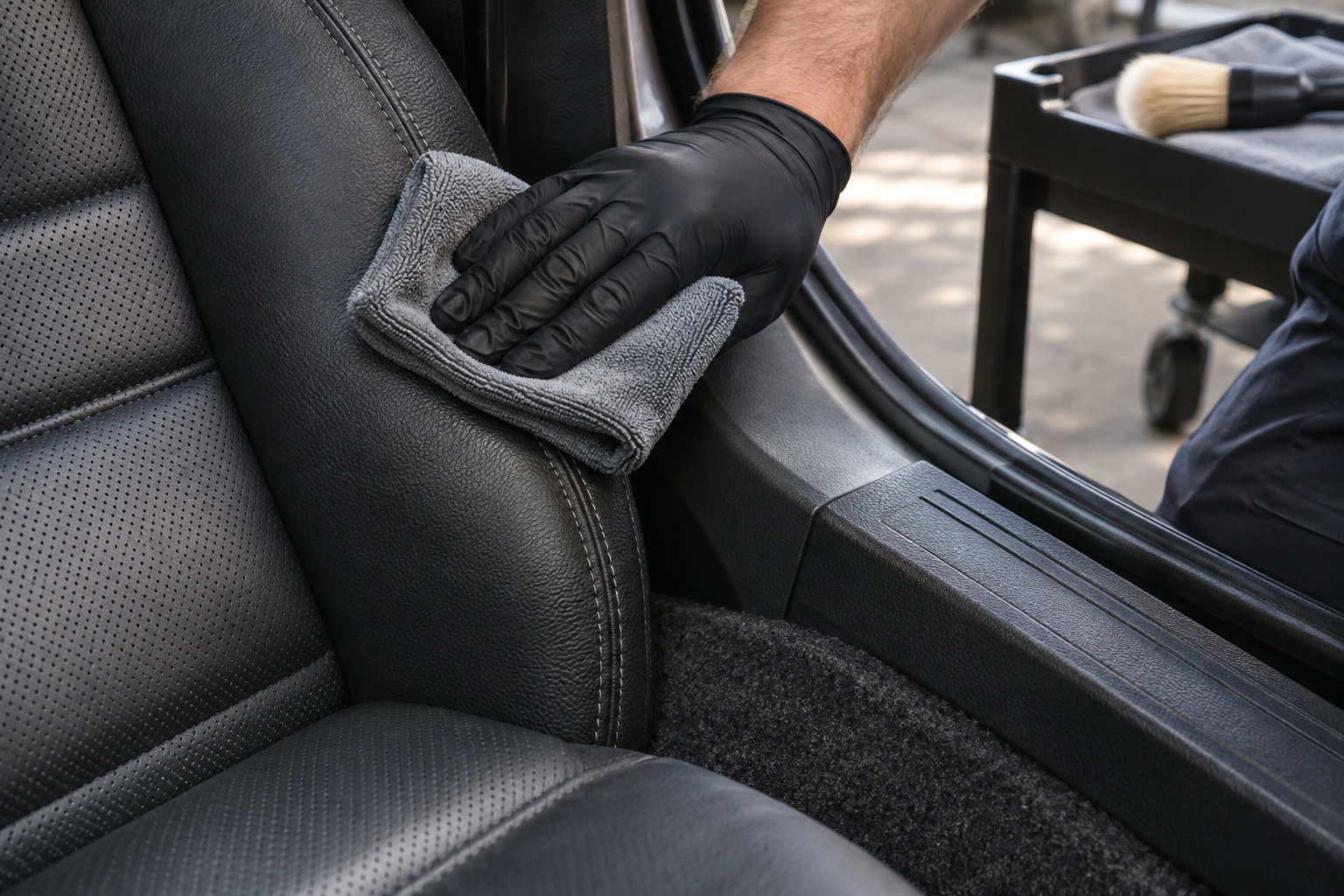
Car interiors mix several materials, and each needs a different approach. Cloth seats and carpet hold dirt down inside their fibres. Leather and vinyl are smoother, so more of the grime sits on top. Hard plastic trim is different again.
Not every seat described as leather is the same. Different panels of one seat can be made from different materials, and finishes vary from one car to the next. That is why your car’s care instructions matter, and why a product that suits one interior may not suit another.
| Surface | What a clean can do | What a clean cannot do |
|---|---|---|
| Cloth seats and carpet | Lift dirt and many spills held in the fibres | Mend a burn, a snag or fibres worn thin |
| Leather and vinyl | Remove oils, grime and many water-based marks from the surface | Fix cracks, scuffs through the finish or faded colour |
| Hard plastic trim | Remove dust, grime and sticky residue | Take out scratches or gouges in the plastic |
Leather conditioning is a separate job from cleaning. Cleaning takes dirt and oils off the surface. Conditioning is a treatment for leather that is already clean. A seat that feels soft after conditioning has not had its cracks or worn patches repaired. Conditioning on its own also does not show that the dirt was removed first.
Why a stain or smell may remain
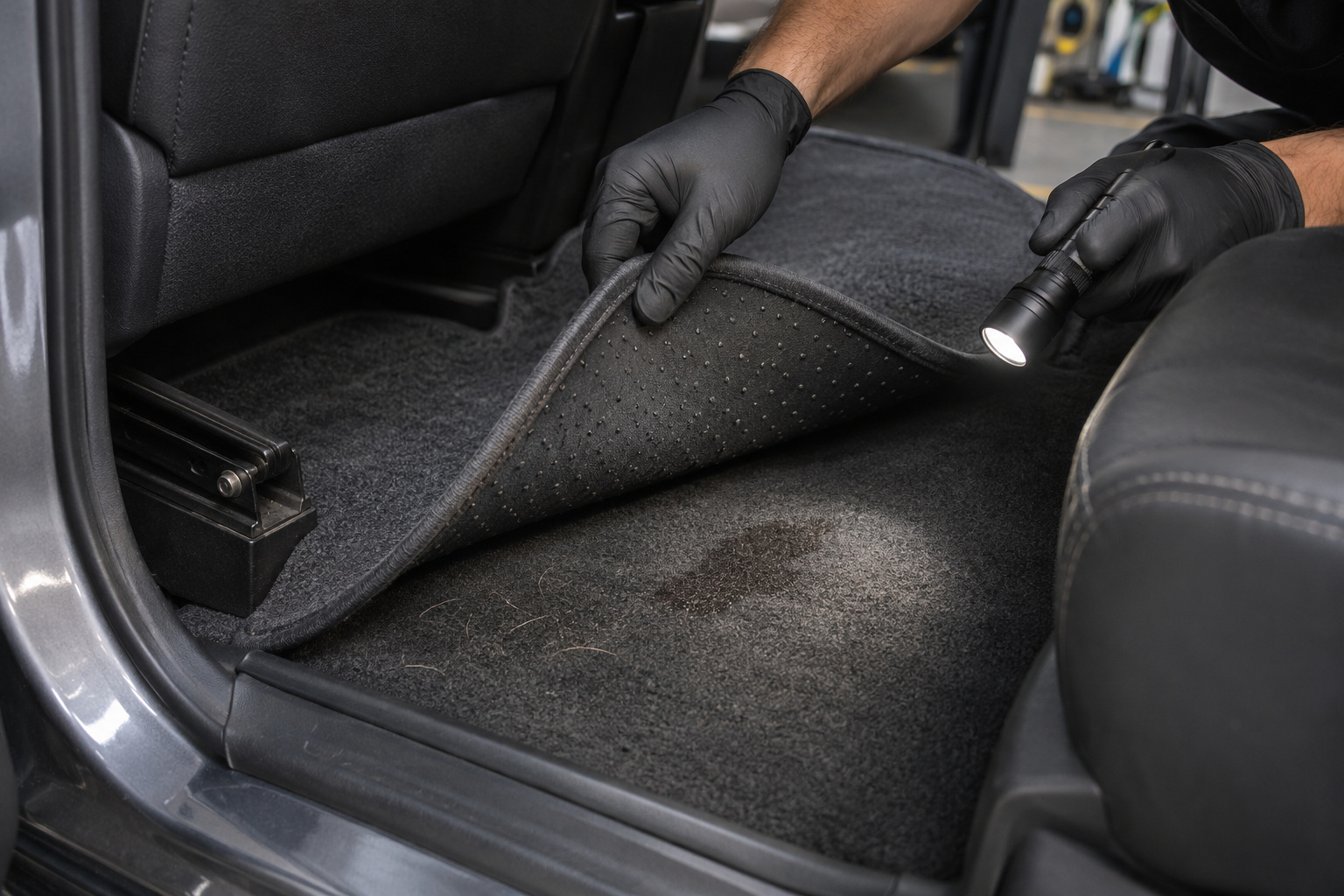
A stain or smell can stay after a good clean because the result depends on more than effort. Four things decide how much a clean can shift:
A fresh water-based spill on a cloth seat is a different job from an ink, dye or oil mark that has worked deep into the fabric. A set-in stain can need more than one round of cleaning, and some will not lift fully. Age is part of the picture, but it does not settle the result on its own. Two marks of the same age can behave very differently.
- What caused it, such as food, drink, ink, oil or smoke.
- The material it is on, and the condition of that material.
- How far it has soaked in, and how long it has been there.
- Whether the source is still in the car.
Smells follow the same rule. An odour comes from something: a spill that soaked into the carpet, food or pet residue, or smoke. Getting rid of a smell means dealing with that source. An air freshener or scented spray only covers it. A cabin that smells fresh when you collect the car may not stay that way if the source is still there.
A smell that has built up for years, such as cigarette smoke or a dog that rides along every day, can sit in more than one surface. Cleaning can reduce it. Nobody can honestly promise it will be gone completely.
Cleaning does not repair damaged material
Cleaning removes something that is on or in the material. Repair changes the material itself. That is the line between the two.
Tears, split seams and cigarette burns are damage. So is a scuff through the finish of a leather seat, colour faded by sun or rubbing, and cracked or broken trim. A clean can make the area around them look tidier, but the damage itself stays.
Cleaning can also make damage easier to see. A seat that looked grubby all over may show a worn patch more clearly once the dirt around it has gone. That can be a surprise, but it means the clean has done its job: what is left is wear, not dirt.
Fixing that kind of damage is upholstery or trim work, a different job from detailing. Whether a damaged panel can be repaired or must be replaced depends on the material and the damage. A clean will not answer that question.
Booking an interior detail in Artarmon
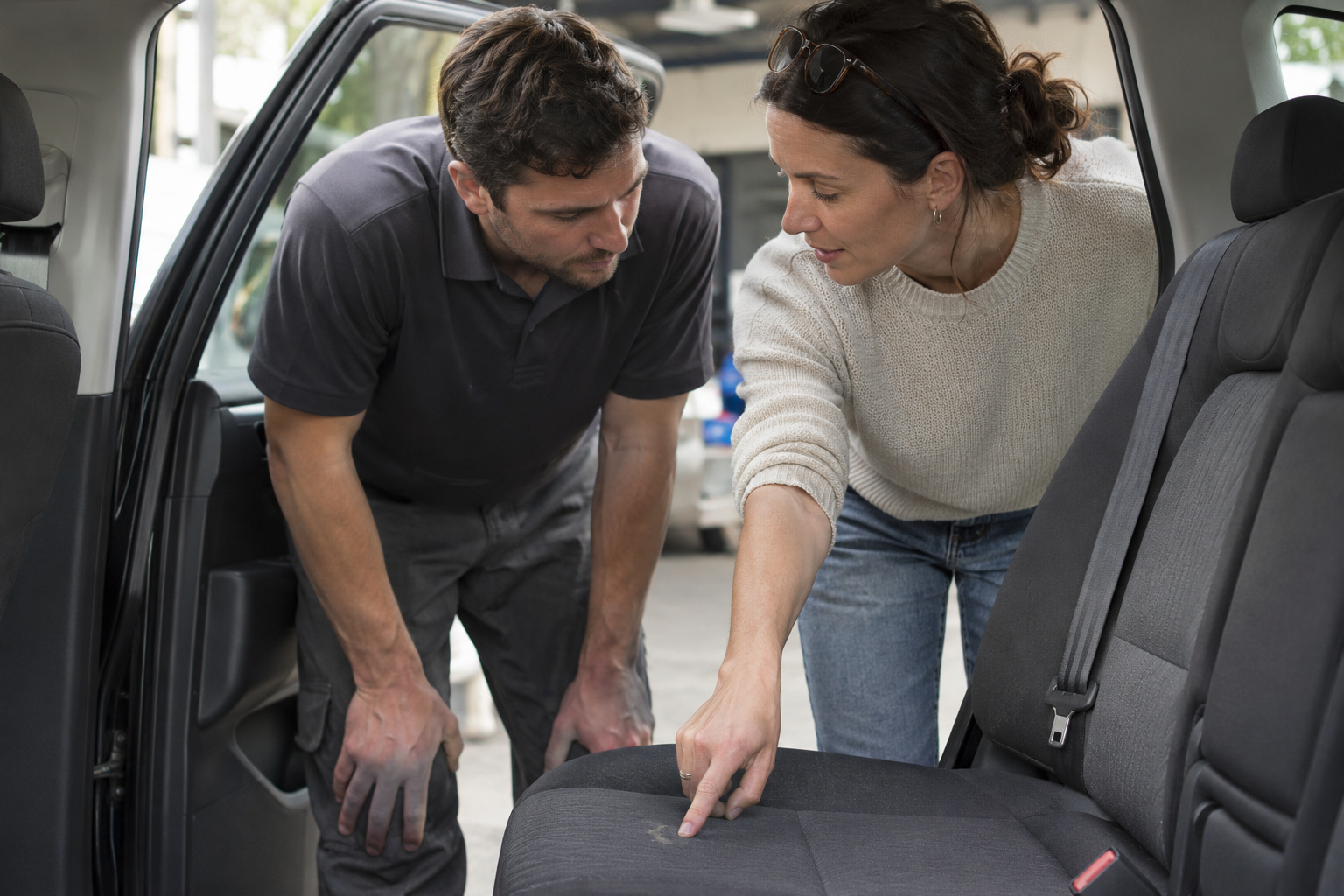
If you know what caused a mark or smell, tell whoever is cleaning the car. The cause shapes what a clean can do.
North Shore Smash Repairs offers interior detailing in Artarmon, which covers vacuuming, fabric shampoo, leather conditioning and odour removal. Seeing the seats and carpet in person is the best way to sort the marks that are likely to be dirt from the ones that are wear. You can request a quote through the online form. The workshop then gets in touch to confirm a date.


