

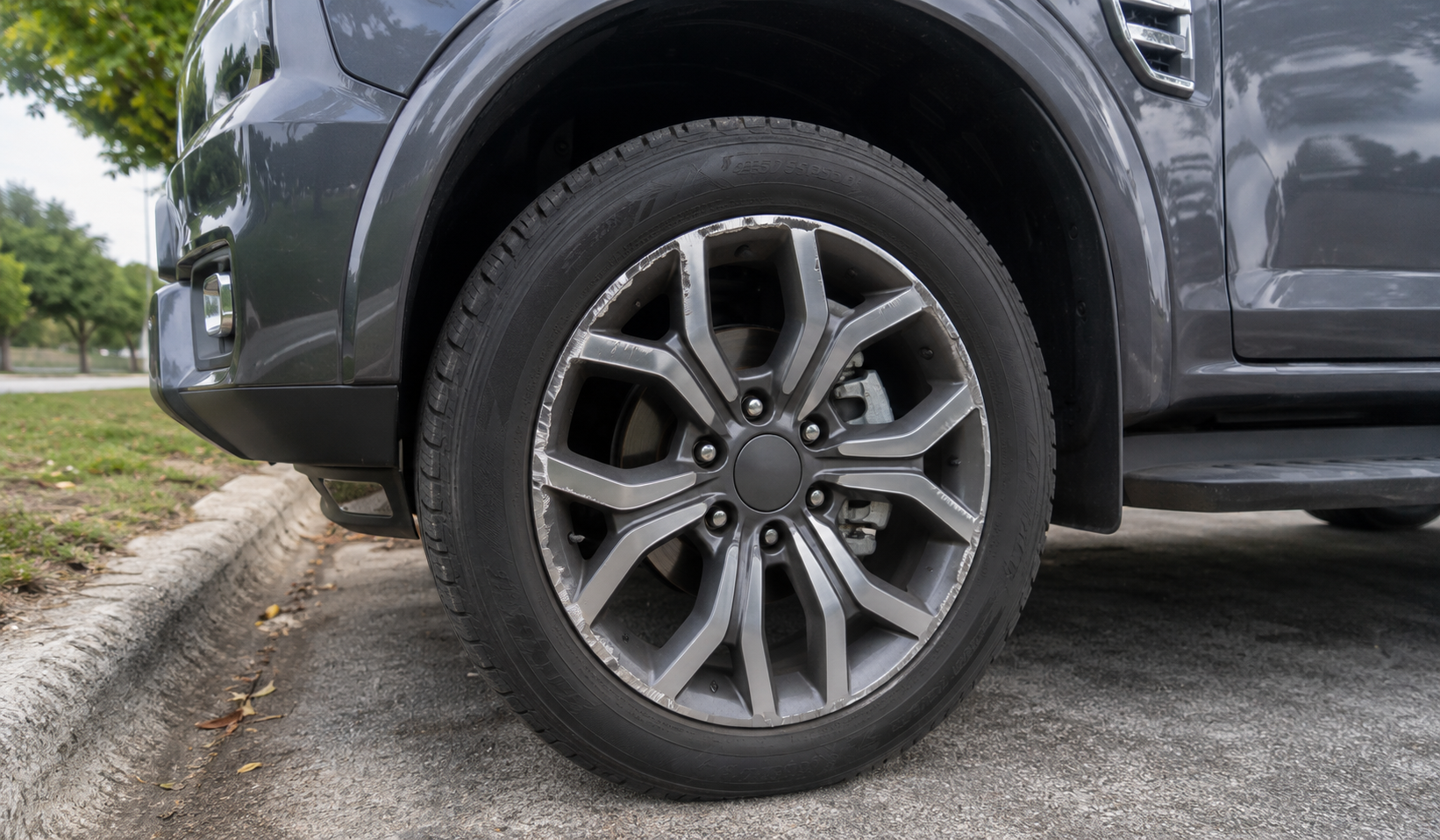
Cosmetic kerb rash usually costs about $100 to $250 a wheel to repair. A brand new alloy wheel starts around $300 and climbs past $1,000 on prestige and large cars. So when the damage is only on the surface, repair is almost always the cheaper call. Replacement is for wheels that are cracked, bent or leaking air, not ones that are simply scuffed.
One thing to sort out first: whether the damage is truly cosmetic or something structural. That is a safety question, and we cover it in our guide on whether a kerbed wheel should be repaired or replaced. This article is about the money side. What a repair costs, what a replacement costs, and how to weigh one against the other.
How much does kerb rash repair cost?
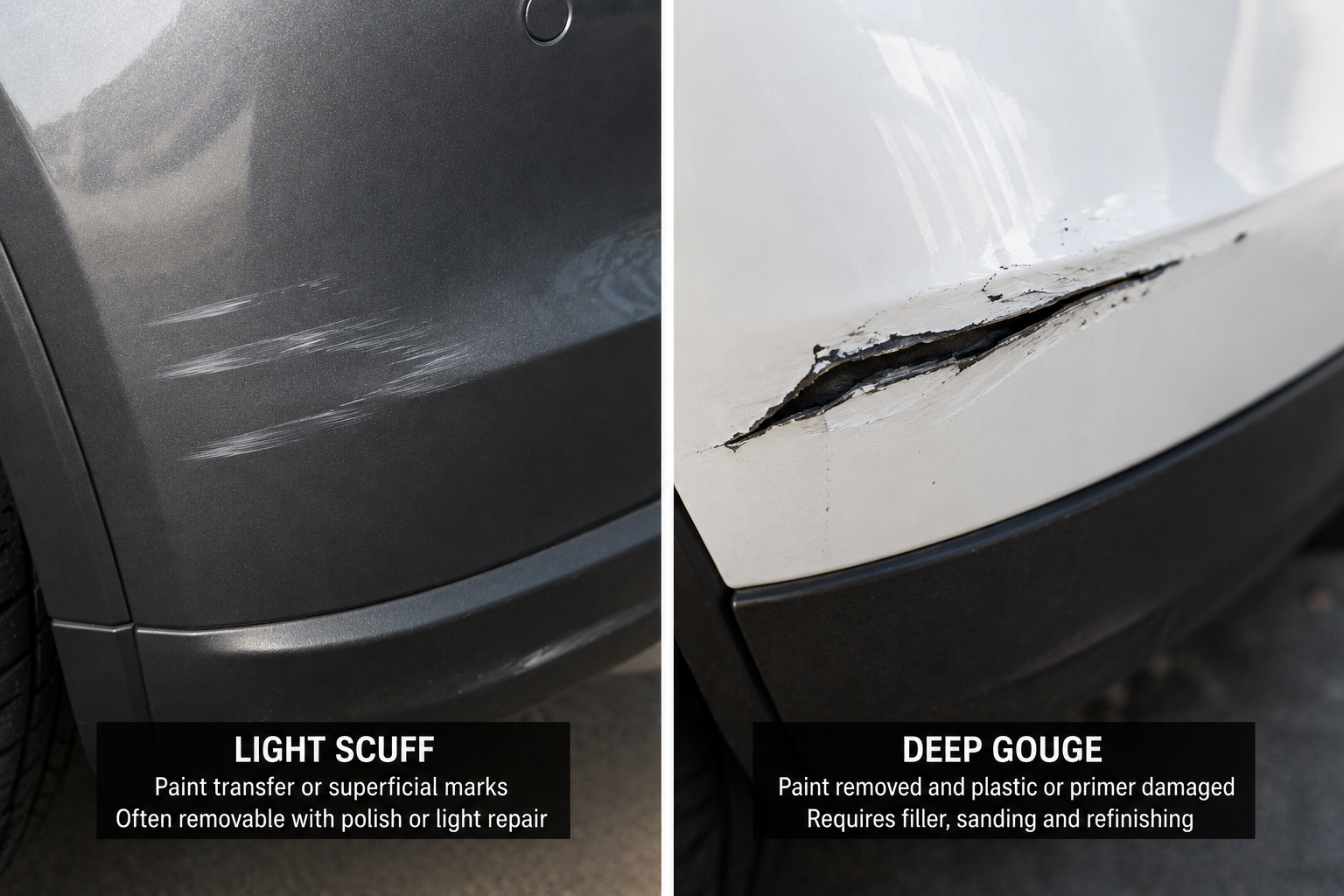
Kerb rash repair, sometimes called gutter rash repair, is priced per wheel. The main thing that moves the price is how deep the damage goes. A light scuff on the outer edge is quick. A deep gouge that has torn out chunks of the coating needs filling, prep and careful refinishing, so it costs more.
Here are the rough market ranges from Australian repairers:
| Damage | Typical cost per wheel | What the work involves |
|---|---|---|
| Light scuffs and scrapes | $100 – $200 | Sand the edge back, repaint, clear coat. Often about an hour of work. |
| Deeper gouges | $150 – $250 | Filler, more prep, then careful colour and gloss matching. |
| All four wheels together | $400 – $600 | Doing them in one visit works out cheaper per wheel. |
These are guide figures, not a quote from us. When you pay to refinish a scuffed rim, you are paying for the wheel to be stripped back, filled if needed, colour-matched and sealed with fresh clear coat so the repair blends in. A workshop with an enclosed spray booth gives a more controlled, dust-free finish than a repair done in the open, which is part of what you are paying for.
What makes one wheel cost more than another?
Two cars with the same scrape can get different prices, and it usually comes down to the wheel. A few things push the cost up:
- Wheel size. Bigger wheels, 18 inch and up, have more surface to sand, prime and paint, so they take longer.
- The finish. Plain silver or gunmetal is easy to match. Metallic, two-tone and custom colours take more care.
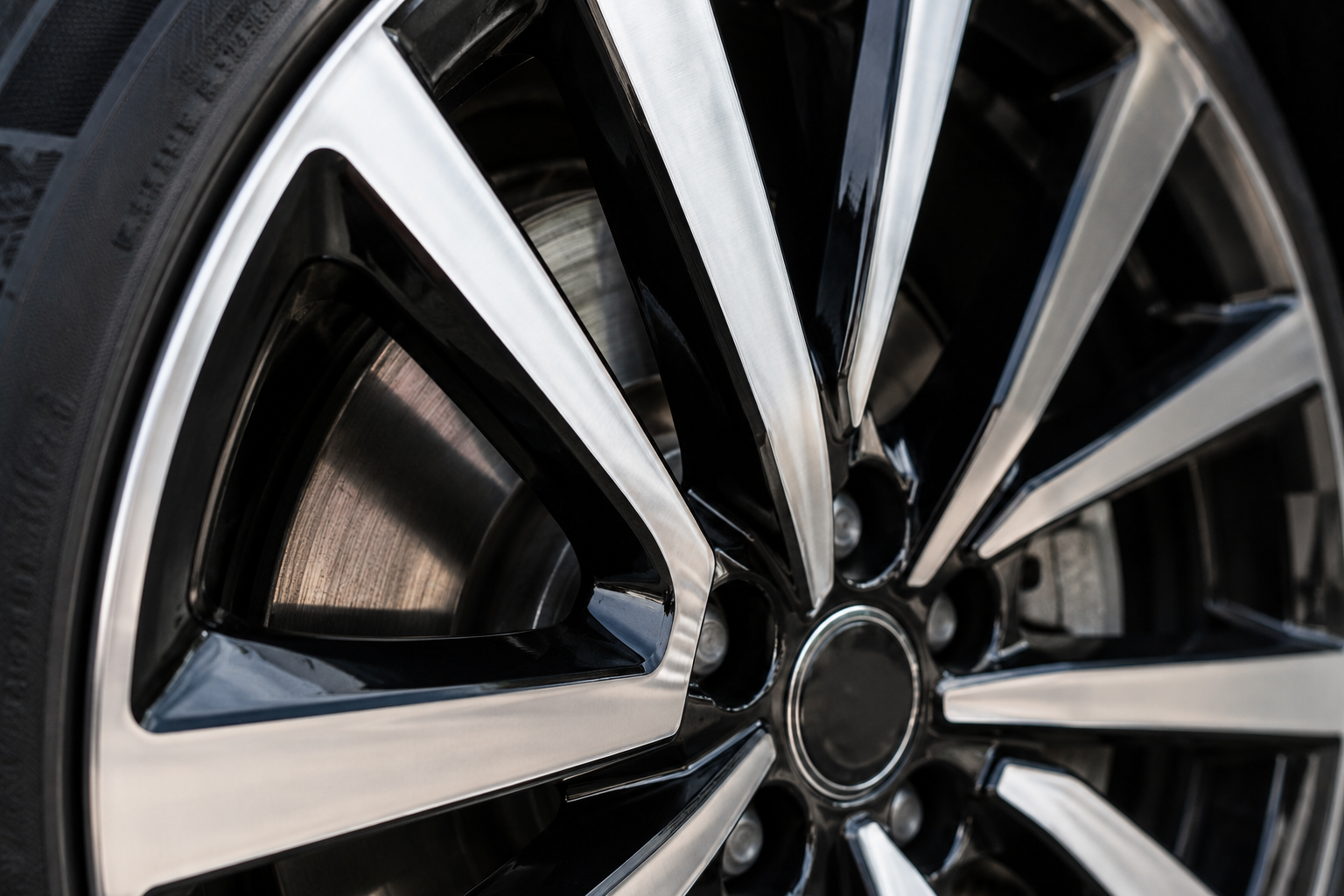
- Diamond-cut wheels. These have a bright, machined face, cut on a lathe so it looks almost polished. Redoing them properly needs a special CNC machine, not every shop has one, and it costs more.
- Two-piece and split rims. More parts and more steps than a standard one-piece wheel.
- The barrel. If the inner rim needs painting as well as the face, that is extra again.
Diamond-cut wheels also have a hidden cost. Once the clear lacquer is chipped, water gets in and corrosion can start, so a scuff left alone tends to get dearer to fix later.
Is it cheaper to repair or replace the wheel?
Repair is almost always cheaper than replacement when the damage is cosmetic. A new alloy wheel for a mainstream car runs roughly $300 to $1,000. On a prestige, performance or large-diameter car, a single factory wheel can run into the thousands. Set that against $100 to $250 to refinish a scuff and the sums speak for themselves.
There is a resale angle too. A buyer who spots scraped wheels will use them to talk your price down, and a clean set lifts how the whole car looks. On a late-model European car especially, one scuffed rim drags down an otherwise sharp-looking car.
Replacement is the right spend when the wheel is genuinely damaged, not just marked. A cracked or badly bent wheel is a safety matter, and refinishing it would only hide the problem. If you are not sure which camp your wheel sits in, the repair-or-replace guide runs through the warning signs.
Should you try a DIY kerb rash kit?
A DIY kit can work on very light scuffing on a plain silver wheel, and the kits are cheap. The catch is the finish. Matching metallic paint, gloss level and clear coat by hand is hard, and a patch that does not quite match can look worse than the original scrape. On diamond-cut or coloured wheels, a home kit rarely blends in.
If the wheel is a plain finish and the mark is shallow, a kit is a fair thing to try. If it is a prestige finish, a deep gouge, or a wheel on a car you plan to sell, a proper colour-matched repair is usually the better value.
Why repairing early is the smart money on a prestige car
Tight parking and high gutters around Artarmon and the lower North Shore catch even careful drivers, and Sydney's potholes do the rest. On a prestige or large-diameter wheel, that everyday damage is dear to replace but cheap to fix while it is still on the surface.
Getting a fresh scuff refinished early keeps the original factory finish and stops corrosion taking hold under the coating. Leave it, and a small mark on a diamond-cut wheel can grow into a full refurbishment that costs far more than the early touch-up would have.
Get a price before you decide
The quickest way to know whether you are looking at a $150 refinish or a replacement is to have the wheel assessed. Send a clear photo of the damage through the alloy wheel repairs page and North Shore Smash Repairs can give you a first idea on cost and the likely repair path from its Artarmon workshop, or book the car in for a proper look.




