

Three things matter in the first day after a hailstorm. Photograph the car where it sits, before you move it or wash it. Lodge the claim that same day, because the queue behind a hailstorm builds fast. And most hail damage comes out without paint. The exception is a panel where the paint has already cracked.
The rest of it is a queue, and the queue is the part nobody explains. Here is what happens next, in the order it happens.
What should you do in the first day?
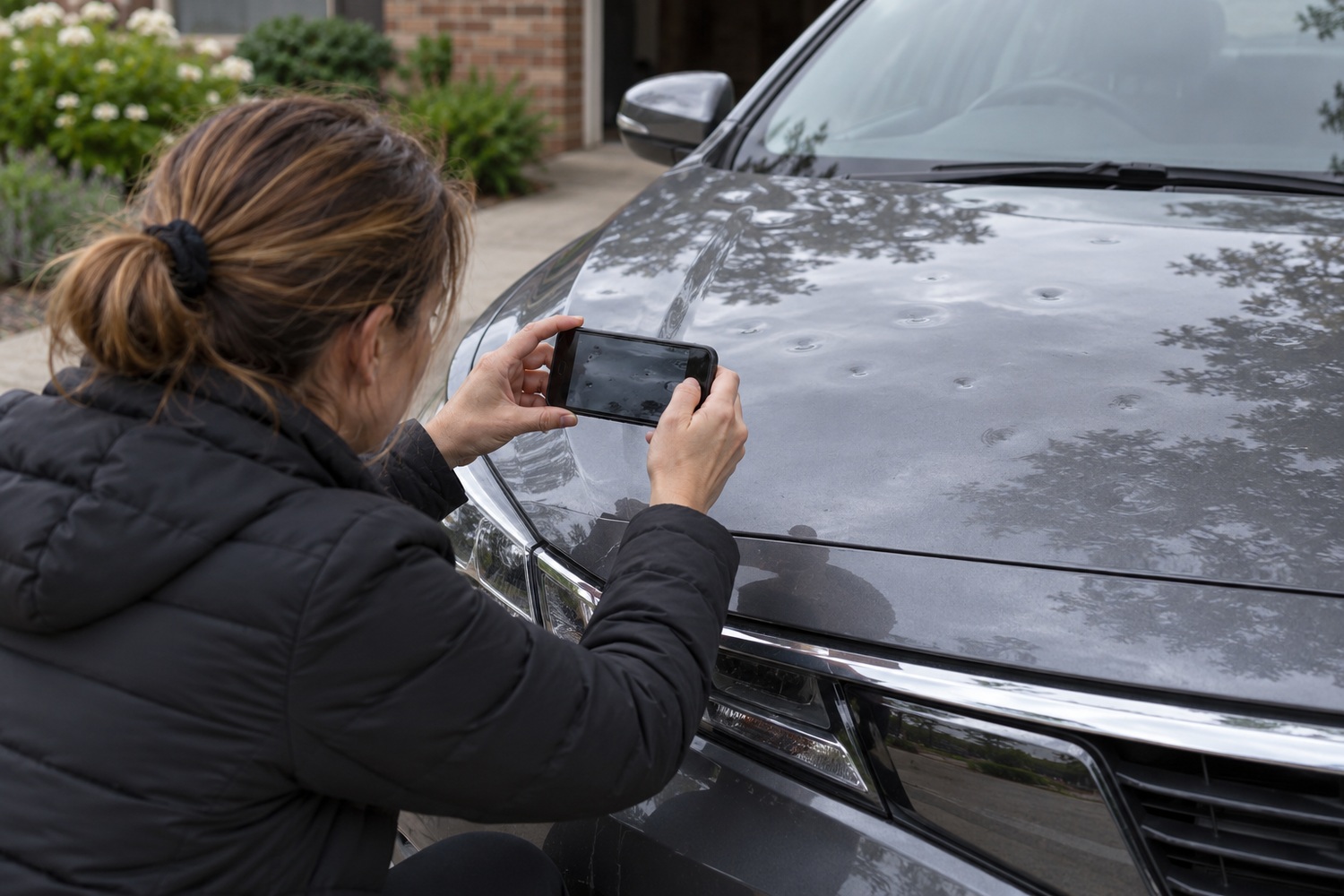
Photograph the car before anything else. Hail dents are shallow and rounded, and in overhead sun they almost disappear. Shoot in flat light, early or late in the day. You can also move the car into open shade. Then crouch down and look across the panel rather than down at it. That low angle is what makes the dimples show up.
Cover the roof, the bonnet and the boot lid. Hail falls close to vertical, so those three panels take most of it. The doors often escape. Include the glass, the mirror caps and the sunroof if the car has one. Hail big enough to dent steel can crack a mirror housing. Glass changes the repair path completely.
Do not run the car through a car wash first. A wet, clean panel hides shallow dents rather than showing them. These photographs are your record of what the storm did.
Why is there a wait after a hailstorm?
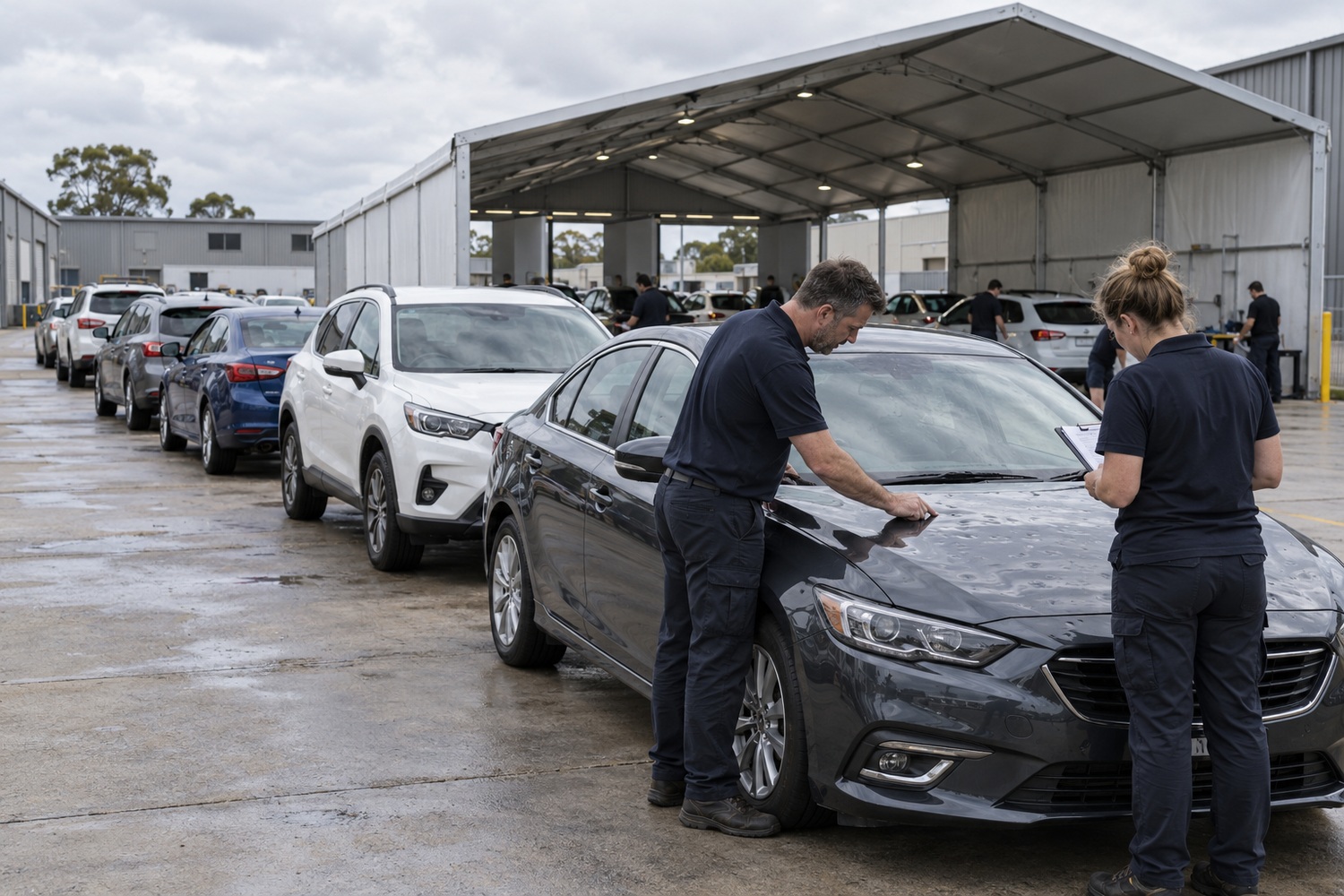
A hailstorm is a mass damage event. One storm cell crosses a corridor a few suburbs wide. It marks every car parked in the open along it. Every panel shop in that corridor then takes bookings for the same week.
Insurers change how they work when this happens. Instead of sending an assessor out to each car, they open a temporary assessment centre. Cars are brought to it, sometimes as a drive-through. It is a production line. The usual one car at a time process cannot move at that volume.
None of that means your claim has gone wrong. The one part you control is where you sit in the queue. That is why the claim goes in on the day, not the weekend after. No repairer can promise you a date in that window, and one who does is guessing.
Will hail damage need repainting?
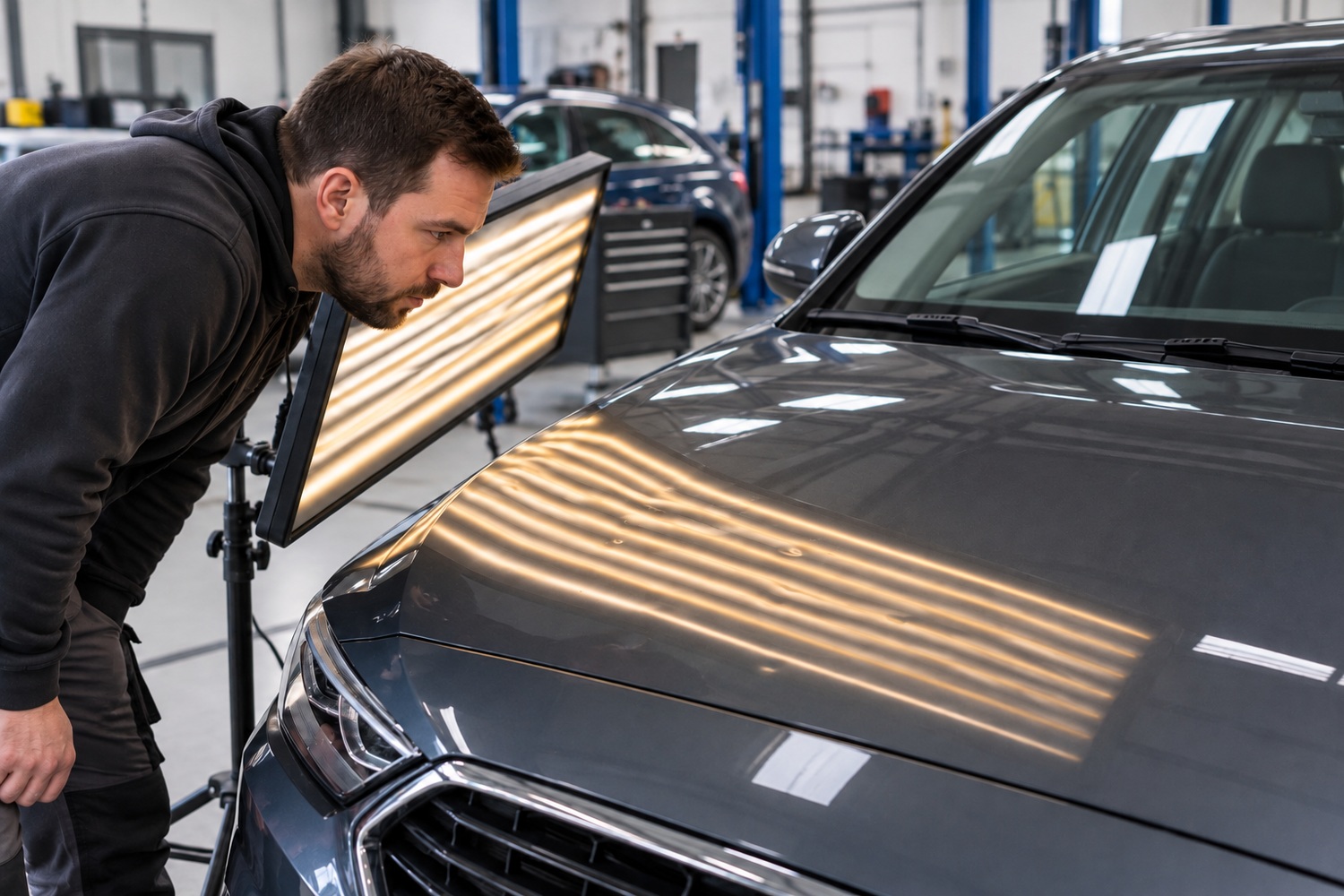
Usually not. Paintless dent repair is the first option for hail. The damage suits the method: shallow dents, rounded rather than sharp, spread evenly over a panel. The technician works each dent out from behind the panel. The paint the car left the factory with stays on it.
Three things take that off the table. Paint that has already cracked over a dent. A dent sitting on a swage line, the pressed crease that runs along a panel. And a panel that cannot be reached from behind, because bracing or trim is in the way.
Where the paint has cracked, the panel is filled, refinished and blended as an ordinary smash repair. That is slower work. After a storm those are the panels that hold a car up.
The method and what it costs are set out in the guide to paintless dent repair in Sydney. That is the page to read if you want the detail rather than the decision. If the method is what you are stuck on, there is a separate piece comparing paintless and traditional dent repair.
What is different about a late-model or European car?
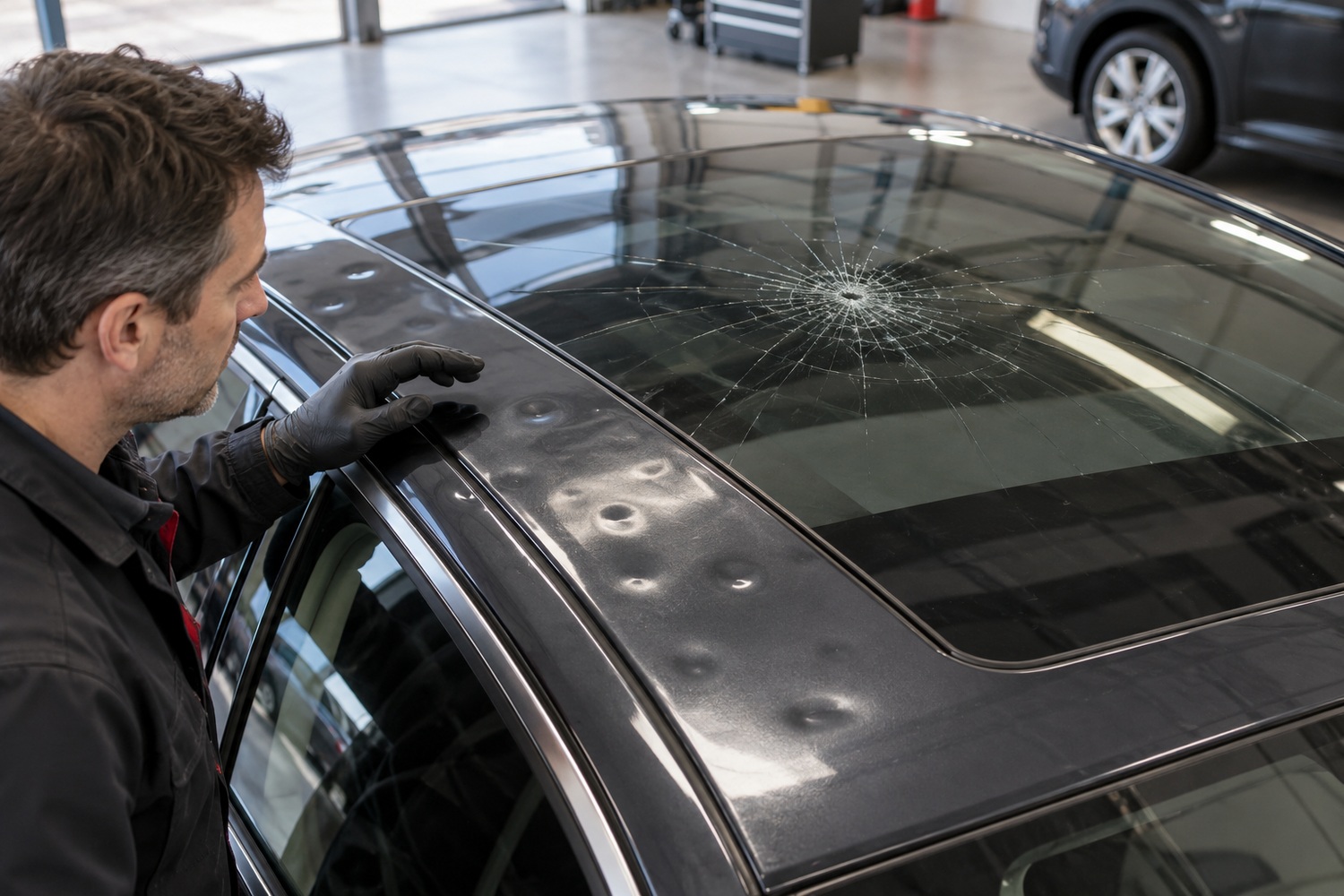
The panel material, mostly. Bonnets and roof panels on BMW, Audi and Mercedes-Benz models built from the mid-2010s are often aluminium rather than steel. Steel holds a memory of its old shape and wants to return to it. Aluminium does not. It takes the new shape and keeps it, and it stiffens each time it is worked. The dents still come out. They come out slowly, in smaller steps, and by someone who does that work often.
A panoramic glass roof is a different case again. Roof glass is safety glass, either toughened or laminated. Toughened glass shatters rather than taking a repair, so a cracked panel is usually replaced. Paintless work can only deal with the metal around it.
Plastic does not respond to the method at all. Mirror caps, spoilers and trim bruised or scuffed by hail are repaired and painted, not pushed back out.
Why did your car take hail damage when others nearby did not?
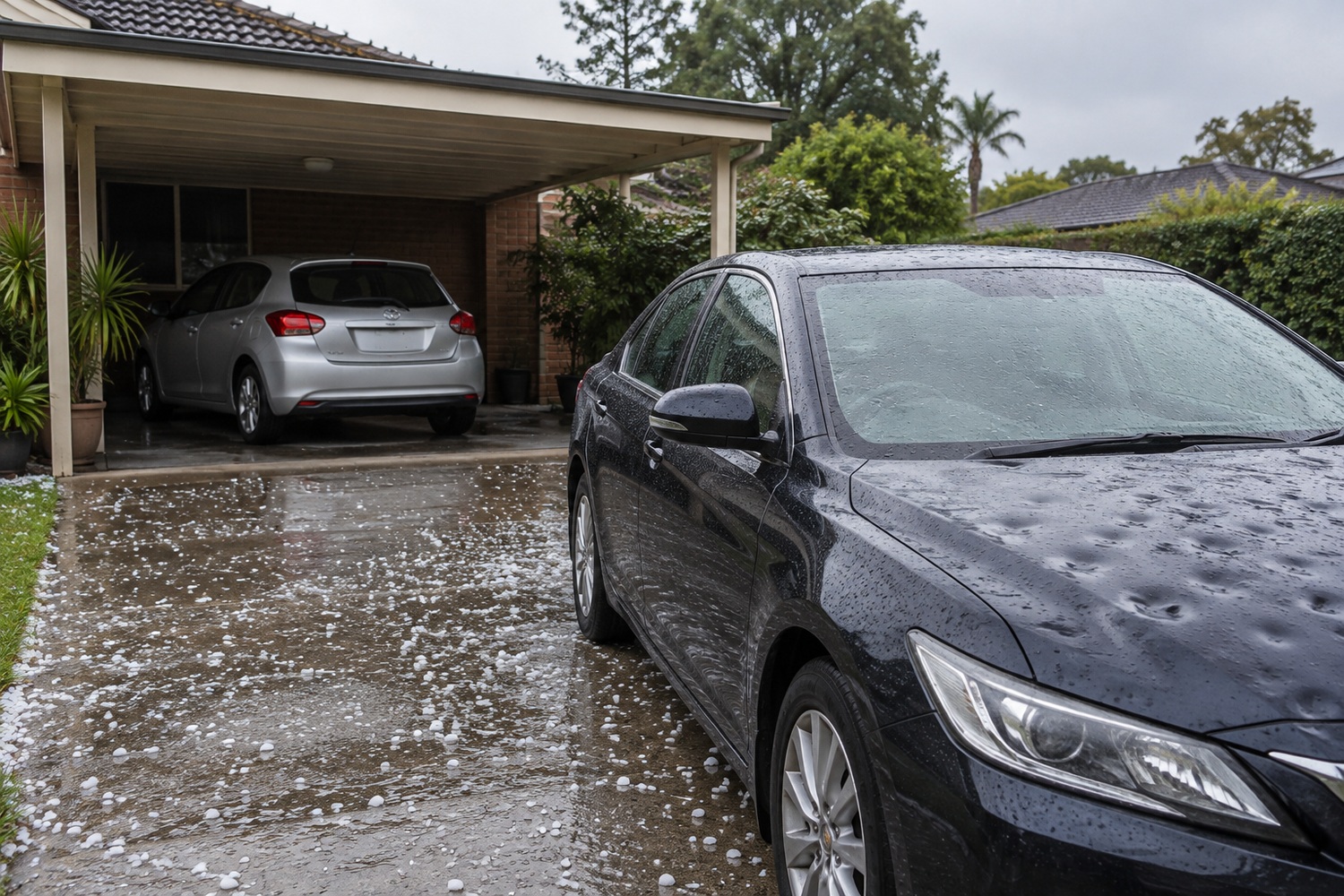
Where it was parked, in almost every case. Hail falls close to vertical. A carport, a garage or even a big tree changes the outcome completely. A car in the open takes the lot.
Around Artarmon’s light industrial pocket, most cars sit uncovered right through the working day. The same goes for the open lots and street parking near Chatswood and St Leonards. A storm that arrives mid afternoon finds them where they were left that morning. The April 1999 storm is still the one people here measure others against.
None of which is much use in hindsight. Nobody checks the radar before parking at work. It matters for the rest of the season. Covered parking is the one thing that keeps a car out of the next claim.
What to ask before you approve anything
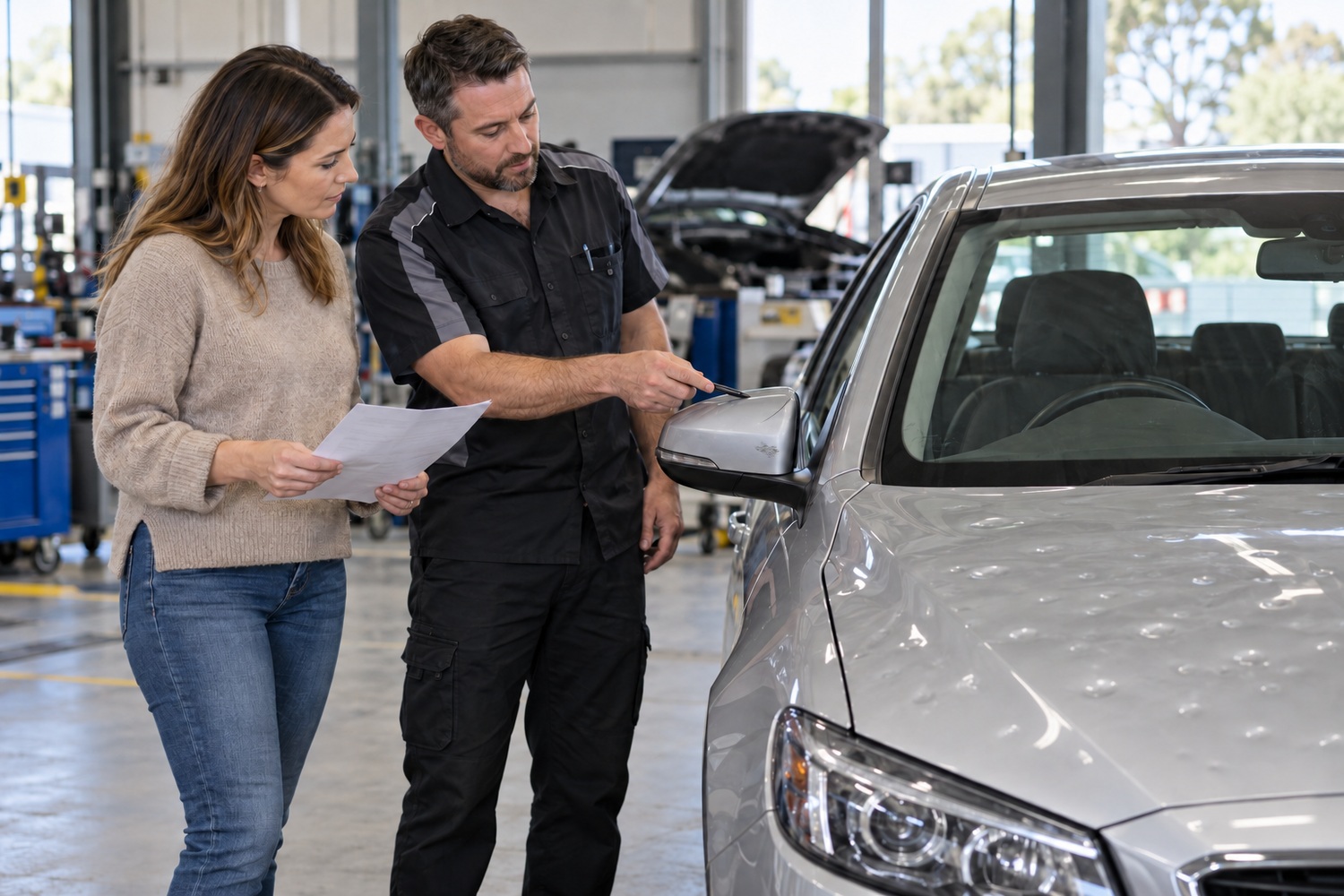
Three questions do most of the work.
On that last one, your policy wording decides it: who may repair the car, and who picks the repair method. The detail on choosing your own smash repairer is set out separately. It is worth reading before you sign anything.
- Does the quote assume paintless repair or panel replacement? They are different jobs with different outcomes for the paint, and that assumption sits underneath everything else.
- Are the glass and the trim included? A quote written off the metal alone can miss a cracked mirror cap or a damaged sunroof. Those come back later as a supplement.
- What happens if the assessor and the repairer disagree on method? This comes up after a hail event, because volume pushes assessments towards the quickest option.
How to get your car into the repair queue
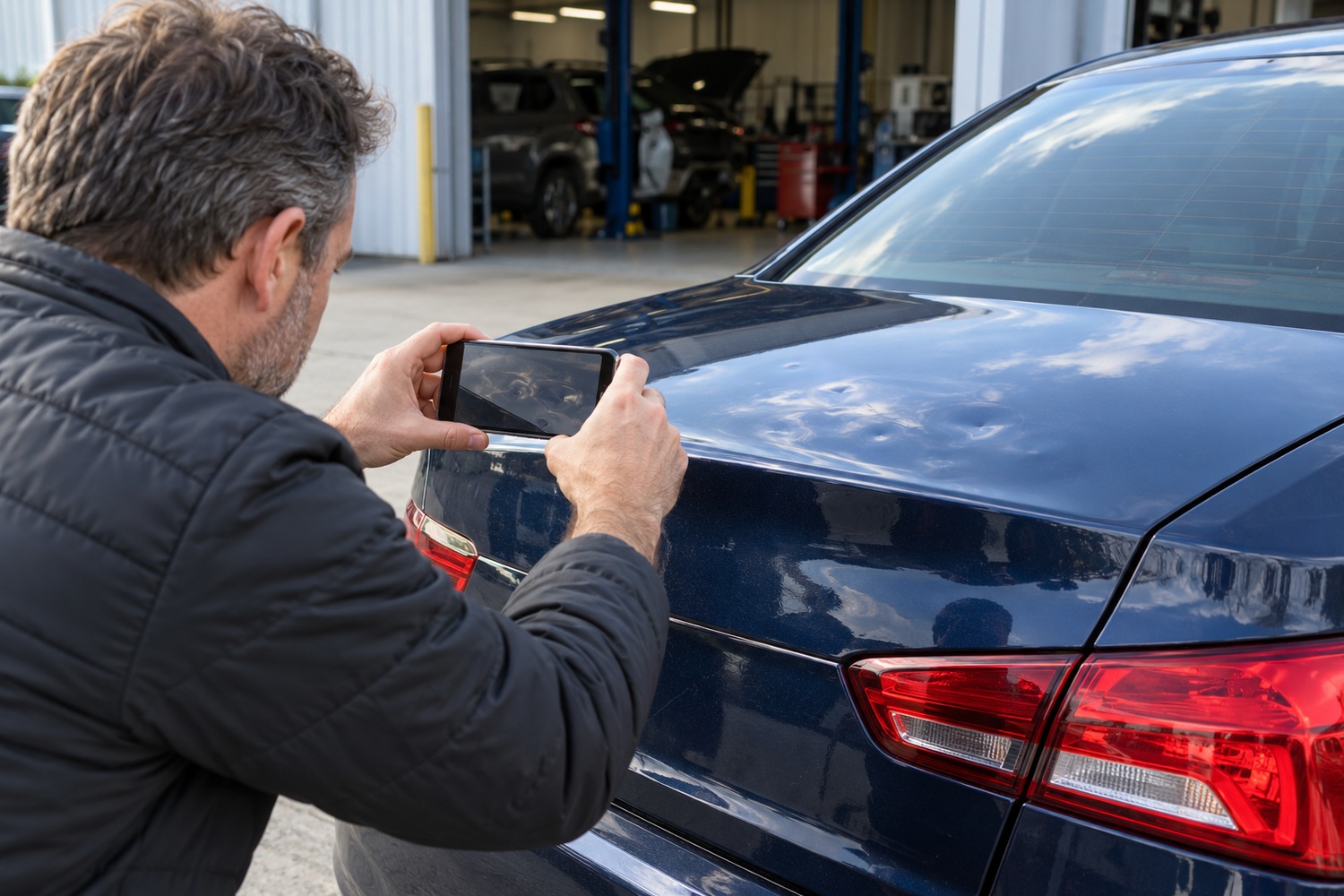
Send photographs. Take the low angle shots of the roof, the bonnet and the boot lid. Add one of the glass and the mirror caps. Send them with your enquiry rather than waiting for an inspection slot.
Most hail claims turn into paintless dent removal. That page sets out what the work covers, so it is worth a look before you commit to anything.
When you are ready, the online booking and quote form takes file uploads. The photographs arrive with the enquiry instead of following it. North Shore Smash Repairs is on Whiting Street in Artarmon. The earlier the car is in the system, the earlier it comes out the other side.




